

Radmantis Appoints Eminent Visual Perception Researcher Richard T. Born, M.D., to Board of Directors
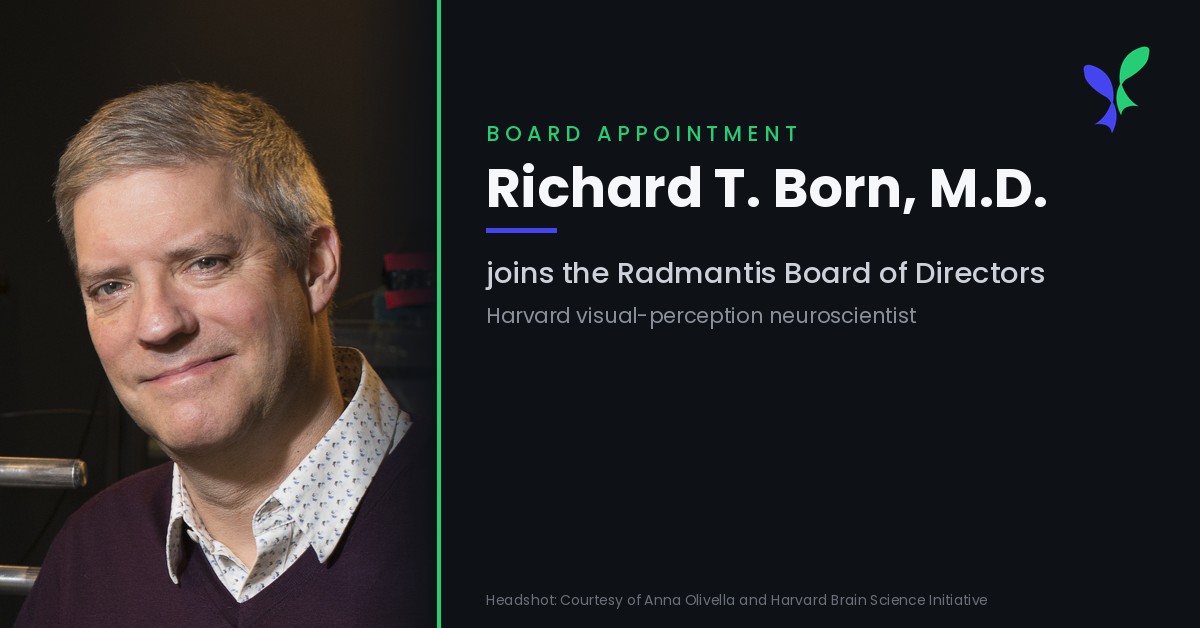
Richard T. Born, M.D. joins the Radmantis Board of Directors. Headshot courtesy of Anna Olivella and Harvard Brain Science Initiative.
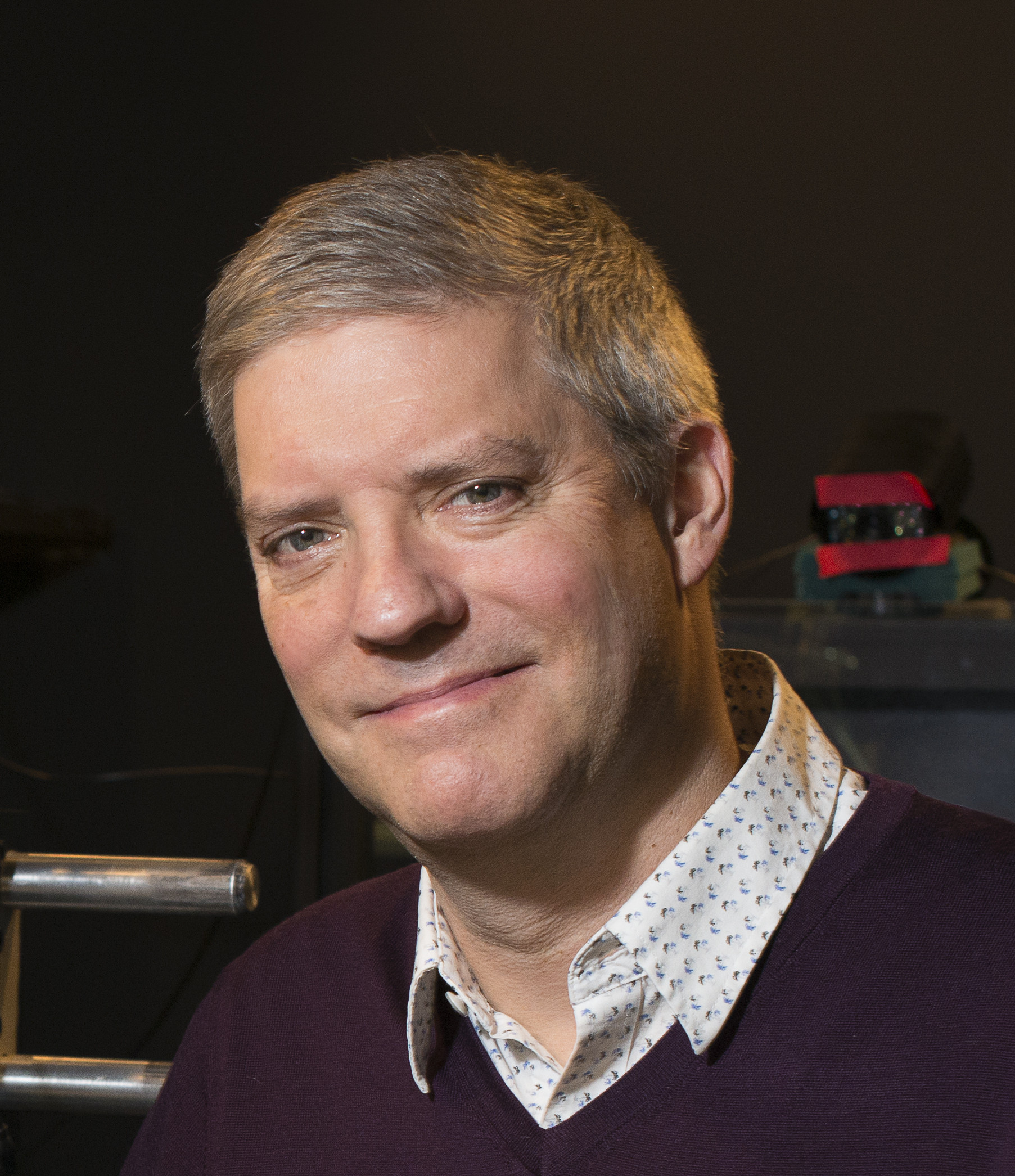
Courtesy of Anna Olivella and Harvard Brain Science Initiative

Radmantis company logo
Radmantis names Harvard neuroscientist Richard T. Born, M.D., an expert in visual perception, to its Board of Directors.
Born's appointment reflects a core conviction at Radmantis: that the hardest problems in machine vision are fundamentally problems of perception. Automated systems can count and classify well under clear conditions, but the aquatic environments in which Radmantis operates are rarely clean. Fish move in dense groups, water clarity shifts, and visually similar species must be distinguished in real time. Human vision remains far better than machines at making sense of exactly these ambiguous, poorly defined scenes, resolving what matters from cluttered, incomplete information. Born's decades of research into the neural circuitry that enables such perceptual abilities will directly inform the design of Radmantis' next-generation perceptual core algorithms.
Born is Professor of Neurobiology, Emeritus, at Harvard Medical School, where he has studied the visual cortex for more than three decades. After earning his M.D. from Harvard in 1988, he trained with visual neuroscience pioneers David Hubel and Margaret Livingstone at Harvard and William Newsome at Stanford. His laboratory's work spans visual area MT/V5, motion and depth processing, neural variability, and cortico-cortical feedback - the latter believed to be one of the mechanisms by which the brain incorporates prior knowledge and context into visual processing. His research has advanced the view that perception is a form of statistical inference, in which the brain combines incoming sensory data with learned expectations to interpret complex scenes. He also served as Director of Harvard's Ph.D. Program in Neuroscience from 2009 to 2014.
“Dr. Born’s work sits precisely at the intersection of biology and computation that defines our technology. His guidance will help us build systems that don't just detect, but truly perceive — with the reliability on which our partners depend." said Moira van Staaden - Founder/CEO of Radmantis.
"Biological vision solves problems our field is still struggling with, particularly the ability to interpret ambiguous scenes using context and prior knowledge," said Dr. Robert Huber, Technology Lead at Radmantis. "Rick’s insight into how neural circuits actually compute perception gives us a principled foundation for making our models more perceptive, more accurate, and more robust in the real conditions where our systems operate."
"Radmantis is applying visual intelligence to problems that genuinely matter — protecting native species, managing invasives, and helping critical infrastructure, like hydroelectric dams, coexist with healthy riverine ecosystems," said Born. “I'm excited to help translate what we've learned about biological vision into more capable and reliable technology."
Radmantis intends to draw on Dr. Born's expertise in visual cortex circuitry — including the role of feedback and context in shaping perception — to guide the architecture of its neural network models. The goal is to move beyond conventional detection toward systems that interpret complex underwater environments with greater sensitivity to context and ambiguity, mirroring the strengths of biological vision.
Born's appointment builds on recent Radmantis milestones across underwater vision for hydropower, robotic aquaculture, smart traps for invasive species, and drone-based imaging for port security.
About Radmantis
Radmantis is a blue tech company pioneering underwater imaging, embedded vision and automation systems for aquatic monitoring, aquaculture and energy infrastructure. Its technologies deliver real-time analytics to support sustainable operations, ecosystem resilience and environmental compliance in aquatic and marine environments. For more information, visit www.radmantis.com.
Moira van Staaden
Radmantis
+1 419-902-6109
mvs@radmantis.com
Visit us on social media:
LinkedIn
YouTube
Legal Disclaimer:
EIN Presswire provides this news content "as is" without warranty of any kind. We do not accept any responsibility or liability for the accuracy, content, images, videos, licenses, completeness, legality, or reliability of the information contained in this article. If you have any complaints or copyright issues related to this article, kindly contact the author above.
